Mouth Sores
Recurring mouth sores are one of the most common oral ailments worldwide, impacting 20 to 25 percent of the overall population. They usually appear as swollen, painful ulcers, and while they’re not contagious, they can be caused by a variety of factors.
Learn About Mouth Sores: Causes & Prevention
Oral ulcers can cause serious discomfort, and they impact how you eat, drink, and speak. They typically emerge in groups of two or four on the inner cheek walls, inner lips, or, less frequently, on the tongue or soft palate. Read on to understand the possible causes of mouth sores and how you can prevent them.
Experts are split on the exact cause of mouth sores, but many believe their frequency depends on genetics, or hereditary factors. Regardless, other circumstances like hormonal fluctuations, stress, food allergies, vitamin deficiencies, or even the vigorous over-brushing of teeth can contribute to their development.
Usually, mouth sores heal after a week or two. More significant growths, called major mouth sores, may stick around for up to six weeks and possibly leave oral scarring
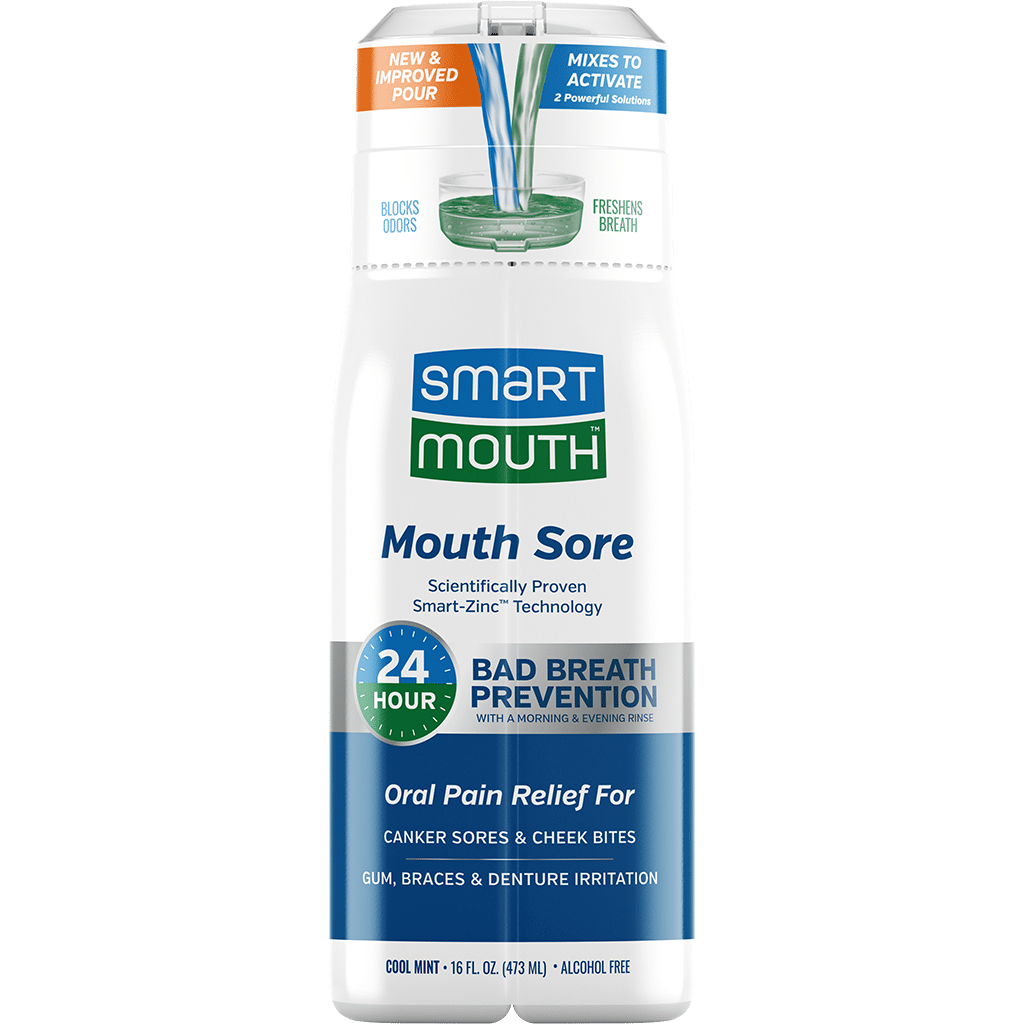
There is no cure-all for canker sores, but you can relieve your pain and quicken the healing process with a combination of treatments, which may include a mouthwash, a pain-relieving ointment, a prescription medication, supplements, and/or a medical procedure.
The term “canker sore” is interchangeable with “mouth ulcer.” These painful sores can be caused by a variety of factors including genetics, hormonal fluctuations, vitamin deficiencies, food allergies, and oral irritation, among others. Interestingly, research also shows that canker sores are more common in women than in men.
Time is often the most effective cure for canker sores—they usually heal after a couple of weeks. However, you can ease the healing process and combat irritation from a mouth ulcer with a variety of treatments, including mouthwashes, prescription gels, and oral supplements.
Resources

Best Mouthwash for Gingivitis
You may have heard your dentist warn of gingivitis, but he or she probably didn’t… Read More

Bad Breath After Brushing Your Teeth
You might be someone who wakes up in the morning and immediately experiences a yucky… Read More

How to Get Rid of Coffee Breath
How do you take your coffee? Hot or cold? Black, with extra sugar and almond… Read More

Do Tonsil Stones Cause Bad Breath?
Let’s take a step back and answer the first question you’re probably asking: What are… Read More